
Season 1, Episode 2 Show Notes:
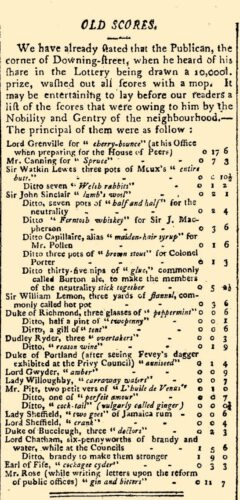
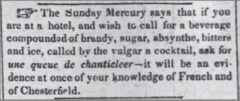
Unlike most people think, the term “cocktail,” as far as we can tell from printed evidence, didn’t originate in America. The cocktail first appears satirically in print in 1798 in a London newspaper called The Morning Post and Gazetteer. The backstory goes that the week before an article had been published that the owner of the Axe and Gate tavern on the corner of Downing and Whitehall that politicians frequented won a share of the lottery and joyfully used a mop to erase his regulars tabs. The satirical article published the next week was a tongue-in-cheek follow-up with a list of politicians (who may or may not have actually frequented this pub) and the monies they “owed” for the drinks they drank, including Tory politician William Pitt (the younger) who would go on to be Prime Minister. Apparently William Pitt, seen at the bottom of this article, owed for “L’huile de Venus”, “perfait [sic] amour” and a less French drink: “cock-tail” (vulgarly called ginger).”
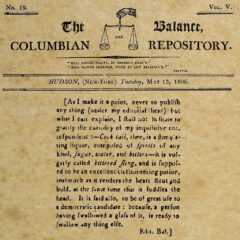
However, we don’t see a definition of what a cocktail is (or was) until The Balance, Columbian Repository, 13. May 1806. It was defined as “A stimulating liquor composed of any kind of sugar, water, and bitters” which does resemble what we know of as a cocktail today.
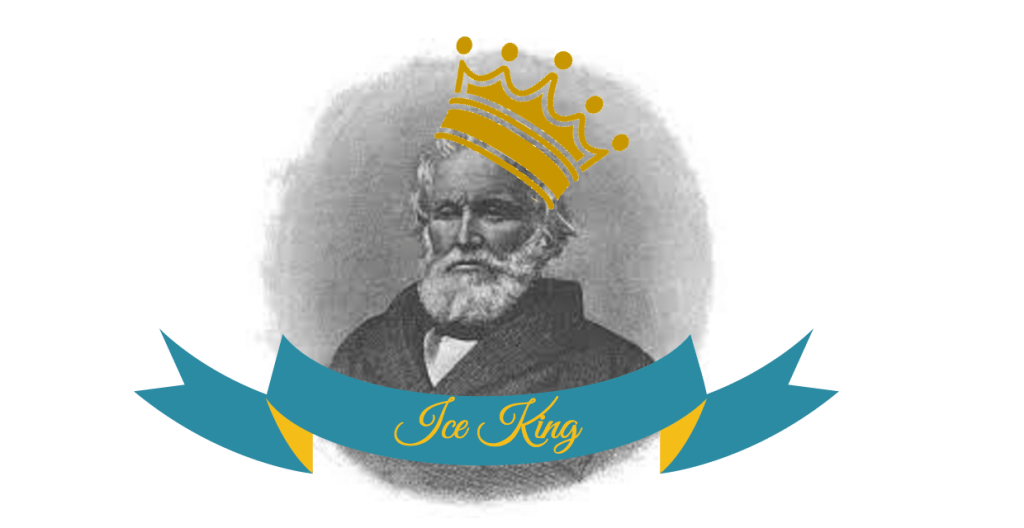
Cocktails had officially made their way to America and there was one man that saw his opportunity to make – well expand, since his family was already rich – his fortune, Frederick Tudor. He liked his drinks cold and saw no reason why he couldn’t bring that luxury to everyone, including those in the tropics. He is credited with saying “A man who has drank his drinks cold at the same expense for one week can never be presented with them warm again,” To be honest, he is probably a large part why we in America are so reliant on ice in our drinks, especially in our cocktails. He was so successful he earned the name the “Ice King” and you can find out a bit more about him here and here (including the source for this fantastic image below).
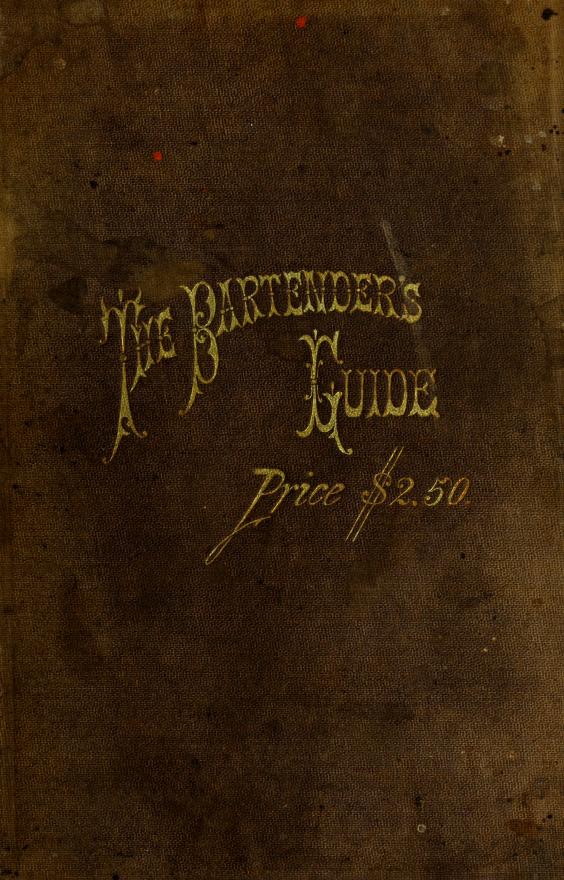
With the rise of cocktails we see the first Bartender’s Guide in 1862 written and compiled by Jerry Thomas. You can find a digitized copy of it here. It not only included 10 cocktails, that were still following the narrow definition we saw above, but many other mixed drinks and guides on proper bar tending practices.
For years Jerry Thomas was blatantly plagiarized and narrow definition of a cocktail prevailed for many. However, there were bartenders across the US and abroad who were expanding how to make cocktails, we can see this in the advertisement for hotel services in the Daily Picayune on February 1st, 1843. This is actually the first reference for using absinthe in what is now commonly called a Sazerac.
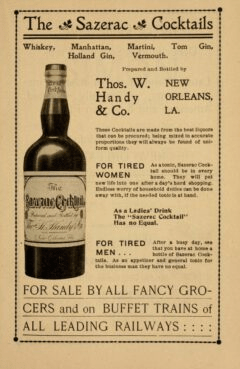
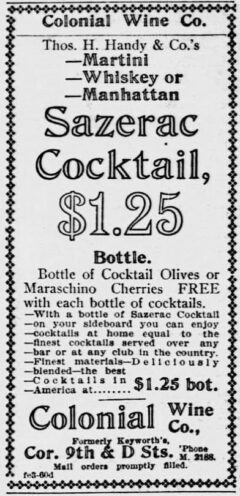
It was long believed that the Sazerac was the first modern cocktail. This is now disputed, especially given that (1) there are references in print before any form of a Sazerac is known to have existed and (2) Sazerac was initially referencing a brand of cognac called Sazerac-de-Forge et Fils and then later was a cocktail bottling company. Listen to the podcast to learn more, but ultimately what we know as a Sazerac today is based off of the Sazerac bottling company’s most successful bottled cocktail (yes, they were popular in the late 19th/early 20th century just like today). Below are some advertisements for bottled Sazerac cocktails.
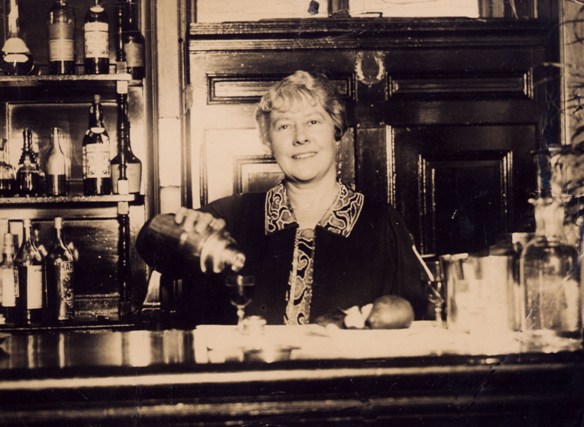
Up until WWI the definition of what constituted a cocktail continued to expand in both bartenders guides and common lexicon. However, after WWI we really see it explode and start to appear in books and advertisements as we see it today, a common term for most drinks that contain spirits. We would be remiss if we didn’t talk about the woman who has laid the foundation for most of the cocktails we know and love today, and that is Ada Coleman, or “Coley”. Listen to the podcast to find out more about her professional life, and then if you would like to know more this website or Wikipedia is a good place to start. She not only invented the “Hanky Panky” cocktail but also was responsible for training Henry Craddock who was a renowned bartender and created the Savoy Cocktail book that is a staple for many bartenders today. It is also worth noting that during Prohibition bartending was a common job in America. Many of Americas bartenders went overseas and traveled, bringing back their knowledge, expertise, and a whole range of new mixed drinks with them when Prohibition ended. While the foundation was laid, this is when the modern cocktail, with its broad definition, became commonplace the world over.
Cheers to our second episode! We hope you enjoyed a cocktail or mocktail while experiencing the podcast and these show notes! Join us in two weeks to find out about the very first museum ever discovered and it, and the relics found there, are probably older than you think!
 Obscuriana